

Case 1

Case 1 (Image 2)
Intensely avid focal bowel wall thickening involving the descending colon, the patient’s primary malignancy.
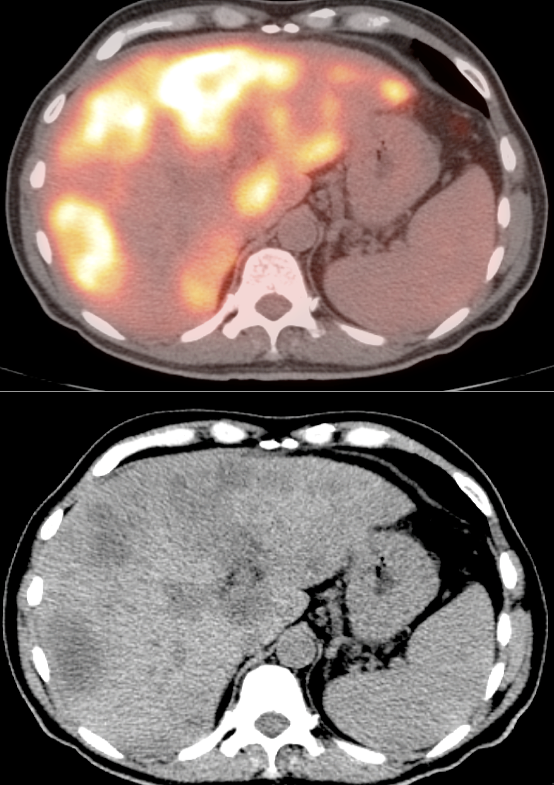
Case 1 (Image 3)
Extensive FDG avid hepatic metastatic disease.

Case 1 (Image 4)
FDG avid left adrenal metastasis.
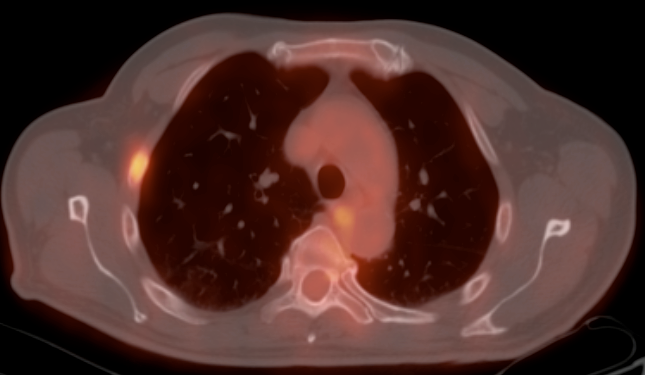
Case 1 (Image 5)
FDG avid right rib metastasis (occult on the CT images).

Case 2
Case 2 (Image 2)
Intensely avid focal bowel wall thickening, consistent with a primary colon cancer.

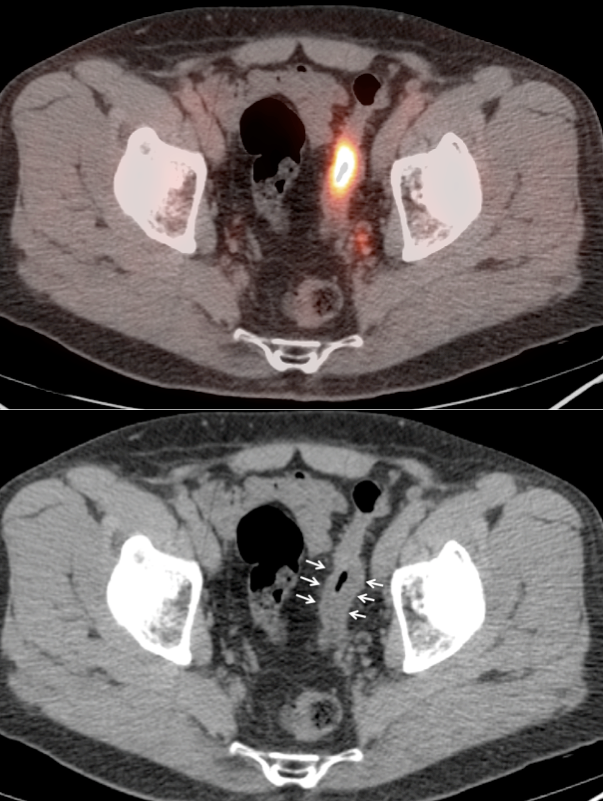
Case 2 (Image 3)
Enlarged and intensely avid metastatic left common iliac lymph node (metabolic activity greater than liver uptake).

Case 2 (Image 4)
Axial images confirm the right-sided focus to represent normal ureteral uptake (note how much “larger” it appears on the PET images).

Case 3

Case 3 (Image 2)
Intensely avid focal bowel wall thickening (mass-like), consistent with a primary colon cancer.

Case 3 (Image 3)
Fused sagittal image clearly localizes this mass to the colon.
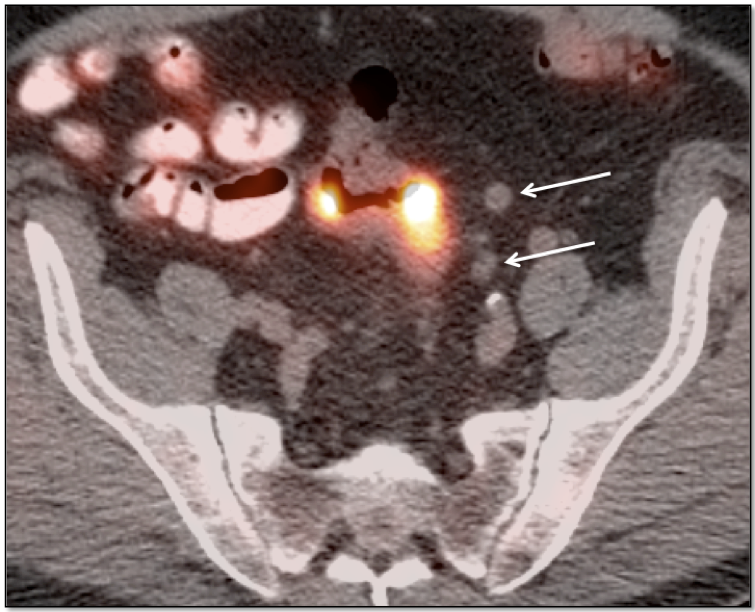
Case 3 (Image 4)
Two small mesenteric lymph nodes adjacent to the patient’s malignancy, the largest measuring 6.0 mm. Although non-avid, their size is “beneath the resolution of PET” and must be considered “indeterminate”. These nodes were positive for metastatic disease at surgery.
Case 4

Case 4 (Image 2)
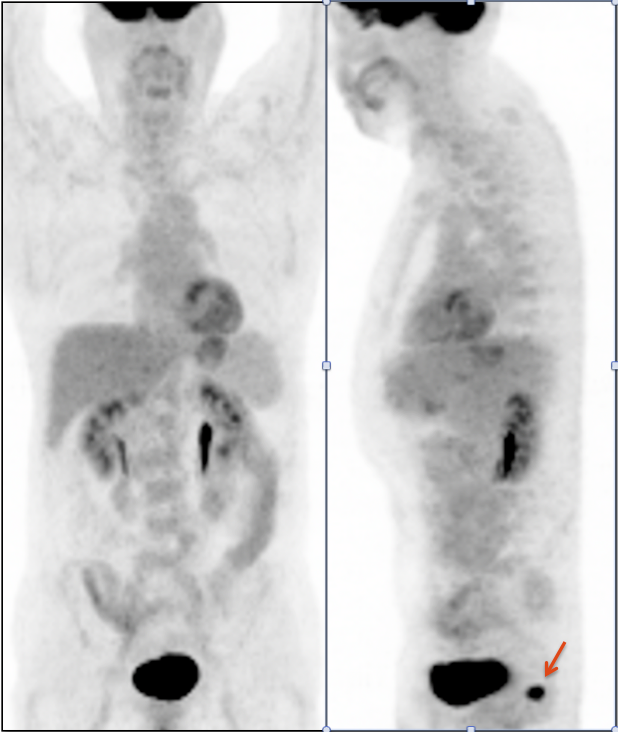
Fused axial image demonstrates focal intense uptake along the posterior margin of the rectum, abutting the patient’s anastomosis. Subtle associated soft tissue fullness is suggested on the CT image. If this scan was performed only a few weeks post-surgery, this finding could represent post-operative inflammatory changes. Unfortunately, this scan was performed 8-months after surgery and represented recurrent disease (confirmed at surgery).

Case 4 (Image 3)
Sagittal images illustrate the very focal nature of this intense uptake and its location at the patient’s anastomosis.
Case 5
Case 5 (Image 2)
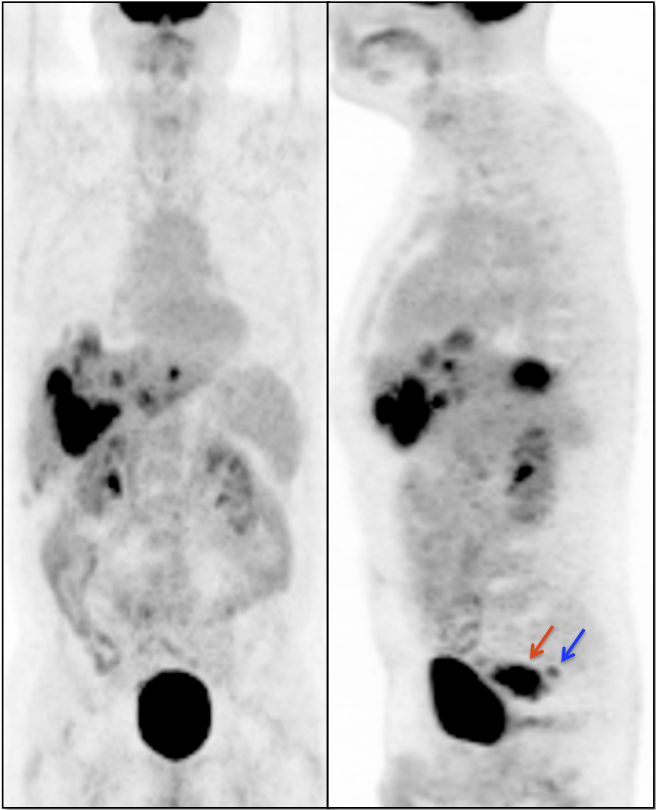
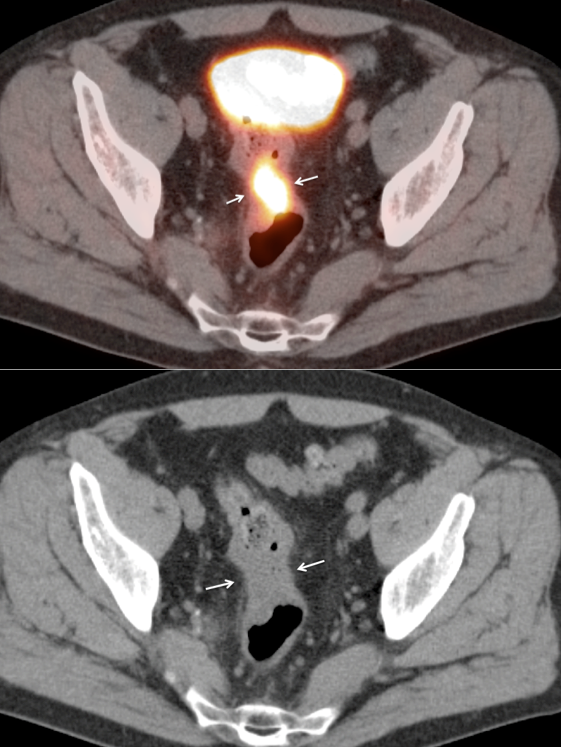
Intensely avid focal bowel wall thickening, consistent with a primary colorectal cancer.
Case 5 (Image 3)
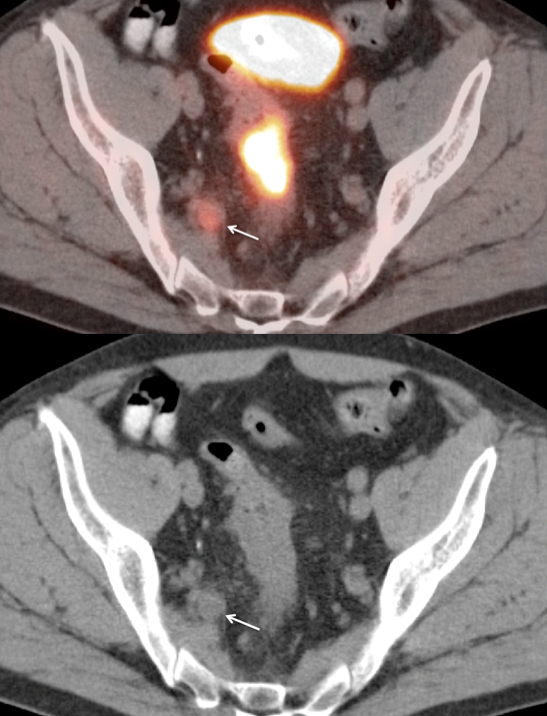
Mildly enlarged FDG-avid right pelvic metastatic lymph node (metabolic activity greater than liver uptake).
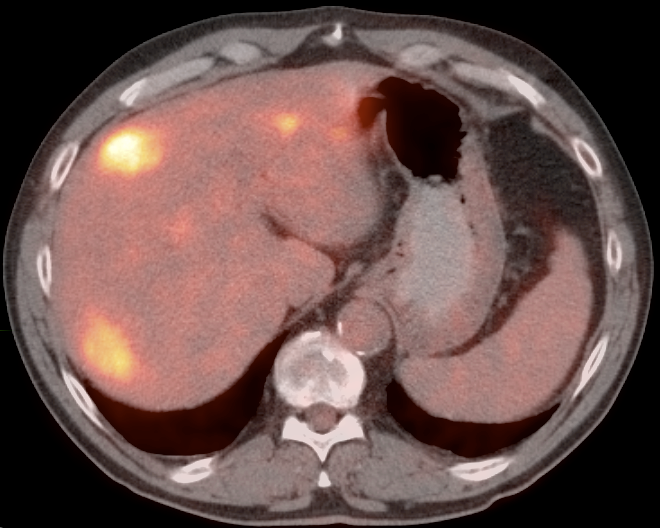
Case 5 (Image 4)
Multiple FDG-avid liver metastases.
Case 6
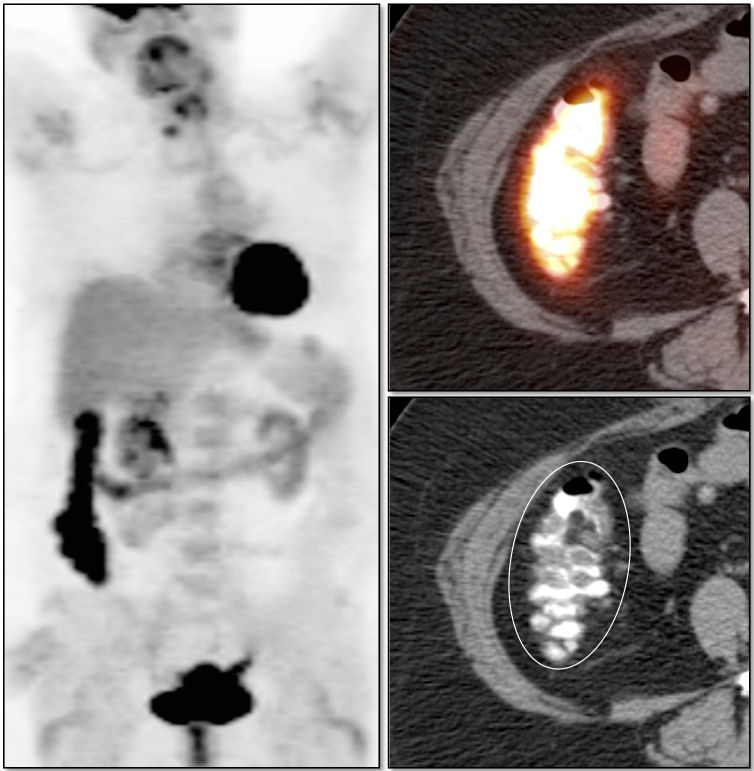
Case 6 (Image 2)
Intense FDG uptake is noted to involve the cecum and lower ascending colon, a very common finding with PET/CT imaging. The uptake is regional rather than focal. The co-registered CT image demonstrates no associated soft tissue abnormality.

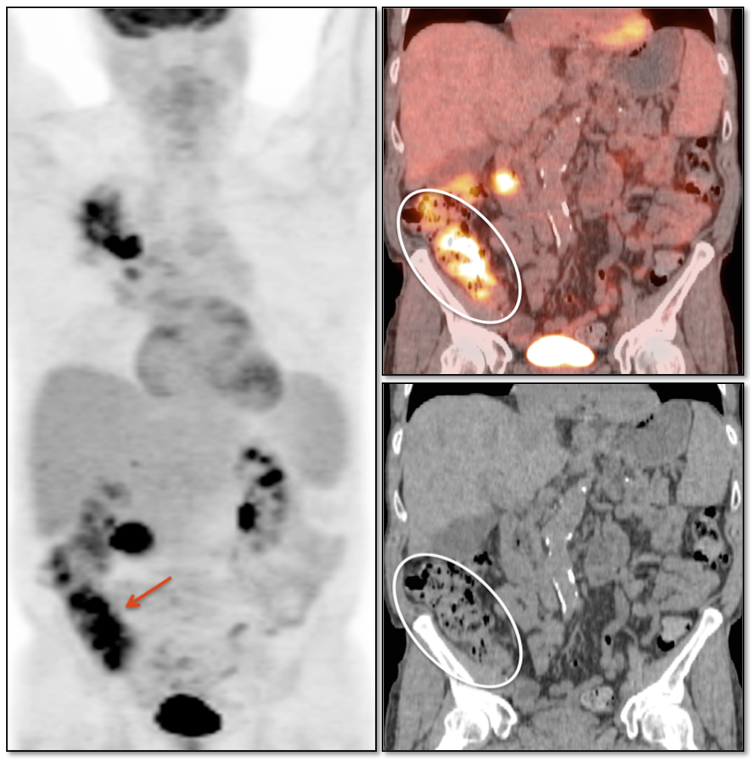
Case 6 (Image 3)
Intense FDG uptake is noted to involve the cecum, extremely focal in appearance. While this can still represent physiologic bowel uptake, its very focal nature, the lack of other areas of physiologic bowel uptake and its rather indeterminate CT appearance were concerning enough to recommend colonoscopy. Colonoscopy was completely normal.
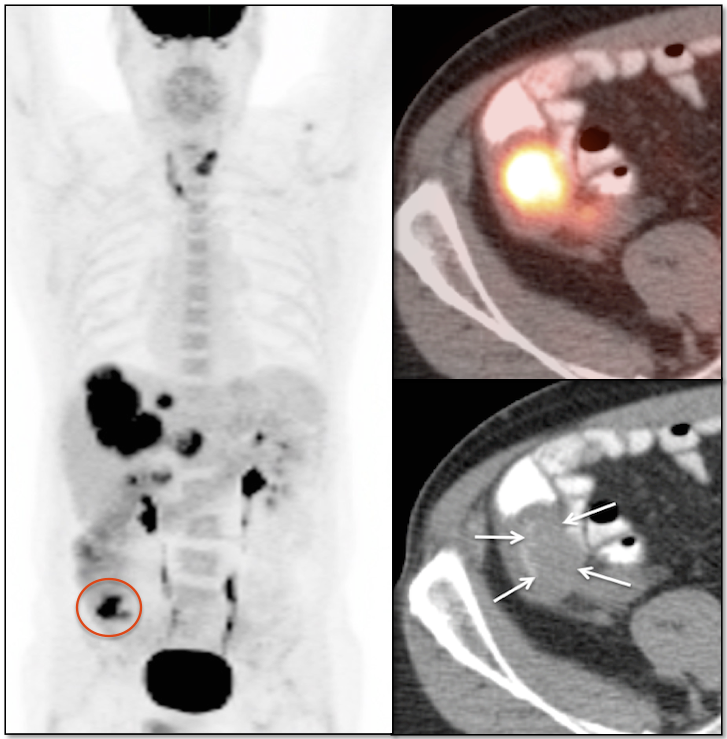
Case 6 (Image 4)
Intense FDG uptake is noted to involve the cecum, very focal in appearance. While this PET appearance can still represent physiologic bowel uptake, focal bowel wall thickening was suggested on the co-registered CT images. Colonoscopy revealed a primary colon cancer (in this case, the metastatic liver lesions made the diagnosis easy).
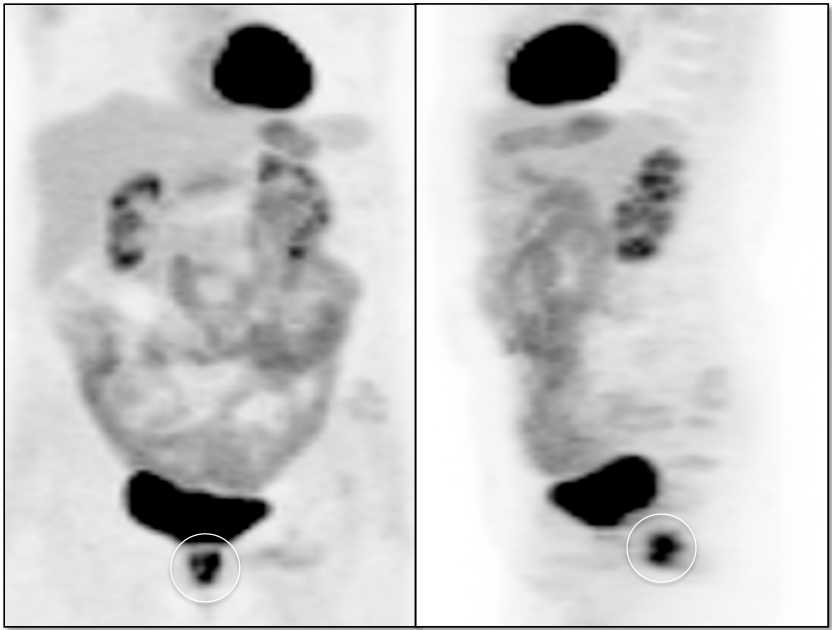
Case 7
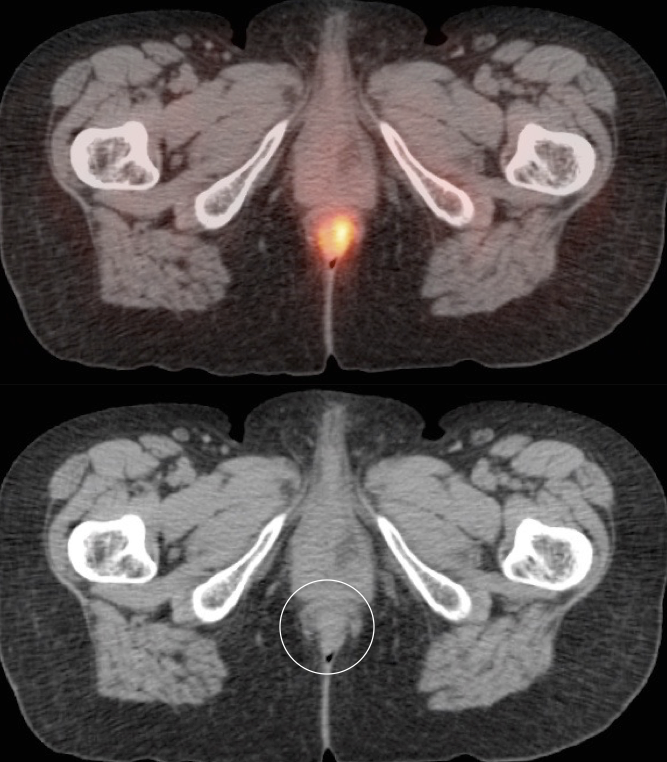
Case 7 (Image 2)
Axial fused image demonstrates intense uptake in the ano-rectal region, presumed to represent hemorrhoidal inflammation (no associated soft tissue abnormality on the co-registered non-contrast CT image).

Case 7 (Image 3)
Sagittal fused image demonstrates intense uptake in the ano-rectal region, presumed to represent hemorrhoidal inflammation (no associated soft tissue abnormality on the co-registered non-contrast CT image).

Case 7 (Image 4)
Be careful to not confuse ano-rectal uptake (typically representing hemorrhoidal inflammation) with rectal uptake (often malignancy).

Case 7 (Image 5)
Note the relationship of the coccyx to the rectum and to the ano-rectal region.
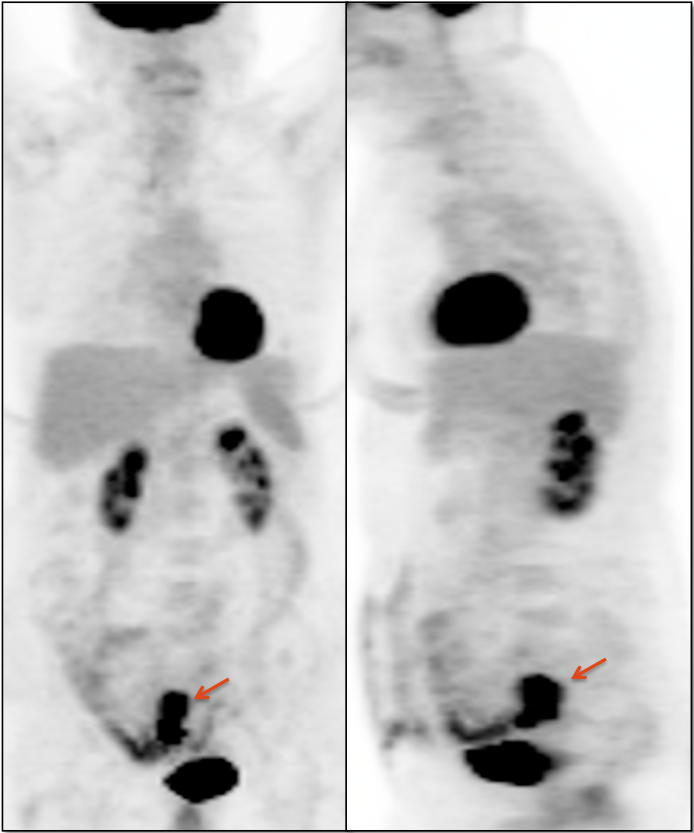
Case 8

Case 8 (Image 2)
Axial fused image demonstrates FDG-avid soft tissue density at the level of the colonic anastomosis. As this patient was only 3-weeks post-op, this FDG avid soft tissue density was presumed to reflect post-operative inflammatory changes (residual malignancy, however, could not be excluded). Follow up was recommended (see Image 3).

Case 8 (Image 3)
This image, 3-months after surgery, demonstrates complete resolution of the FDG avid soft tissue previously present at the anastomosis site, confirming the diagnosis of post-operative inflammatory changes.
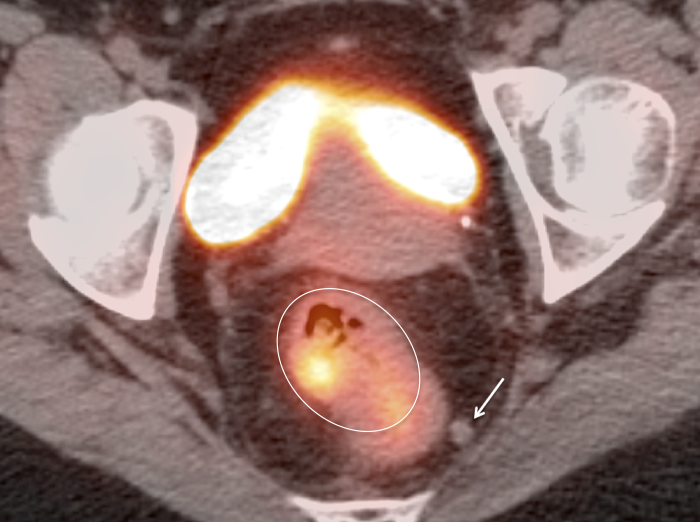
Case 9

Case 9 (Image 2)
Fused axial image demonstrates an intensely avid colorectal primary malignancy. A 6.0 mm pre-sacral node is present, only minimally avid. Because its size is “beneath the resolution of PET”, its metabolic activity is likely underestimated. Consequently, it is suspicious for metastatic disease.
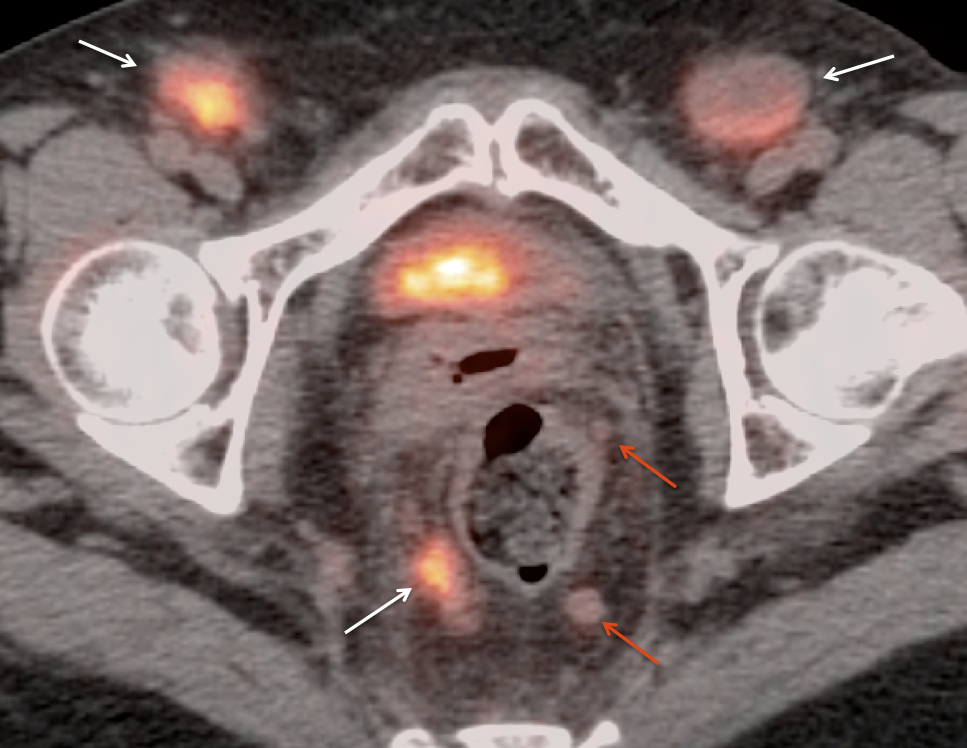
Case 9 (Image 3)
Fused axial image demonstrates intensely avid metastatic right perirectal and bilateral inguinal lymph nodes (white arrows). Additionally, two small minimally avid perirectal nodes are present (red arrows). Because their small size is “beneath the resolution of PET”, their metabolic activity is likely underestimated. Consequently, they are still suspicious for metastatic disease. Any uptake in a clinically concerning node less than 8.0 mm in size should be treated as suspicious.