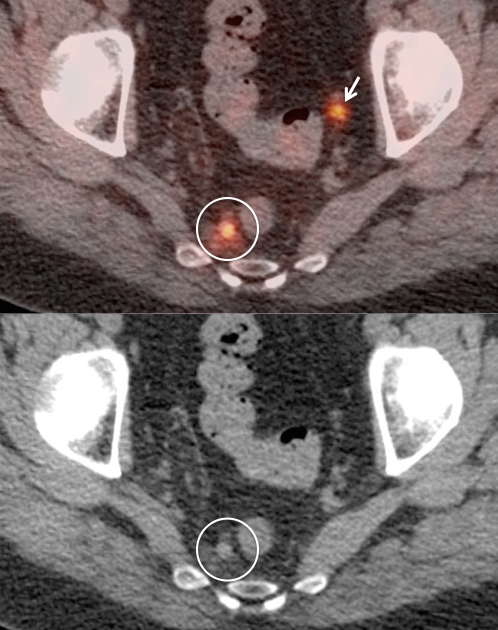
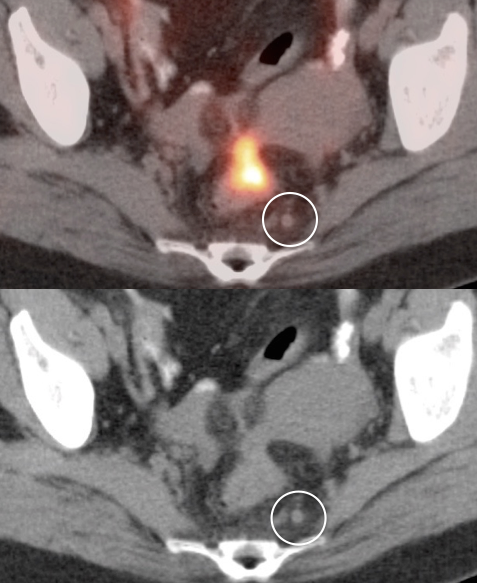
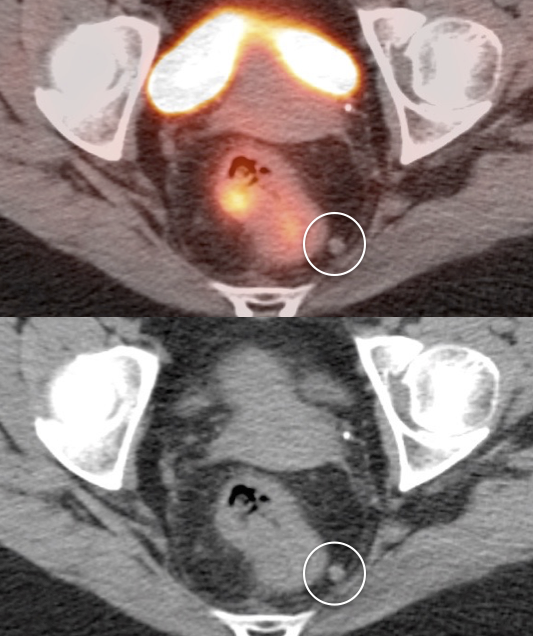
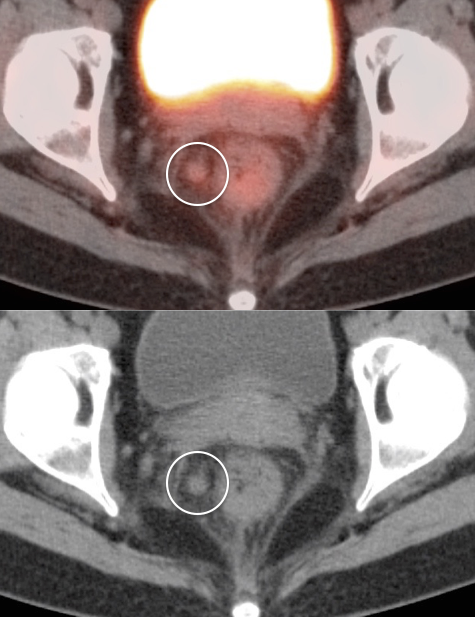
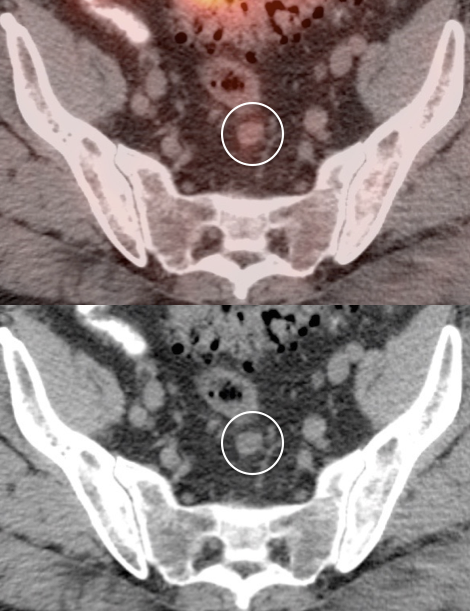
[Assessing nodal activity in lymphoma cases is addressed in detail, here.]
For most primary malignancies, PET/CT can be a powerful tool in the assessment of regional and distant metastatic adenopathy.
There are 2 main challenges the PET/CT radiologist must address when assessing FDG-avid lymph nodes:
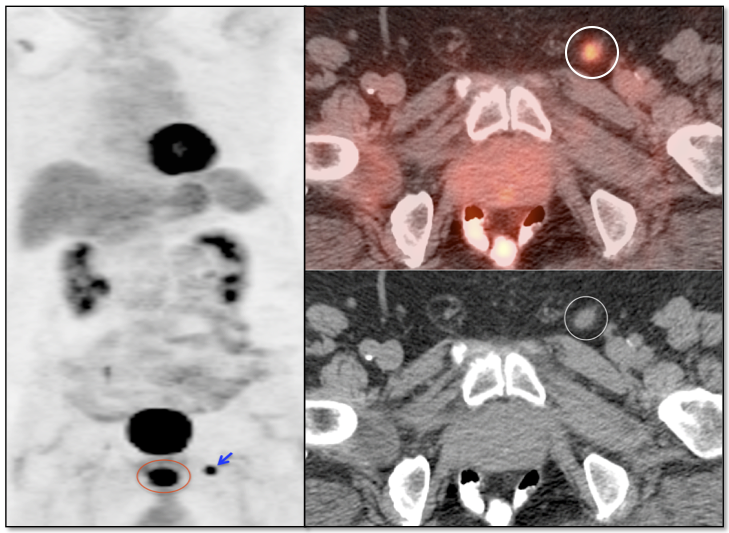
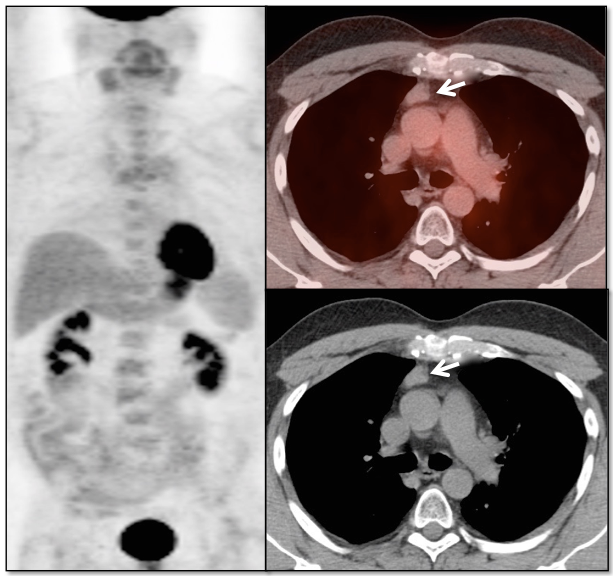
- Is an FDG-avid lymph node metastatic or reactive/inflammatory?
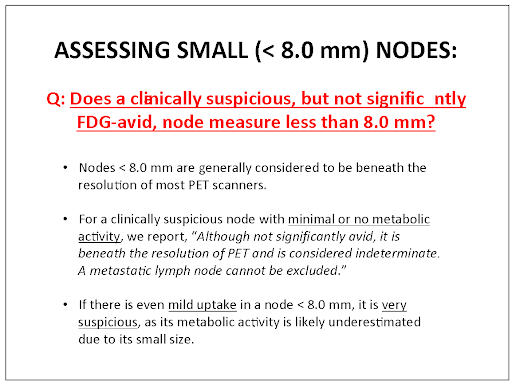
- Is a small (< 8.0 mm) non-avid or minimally avid node – one considered “beneath the resolution of PET ” – malignant?
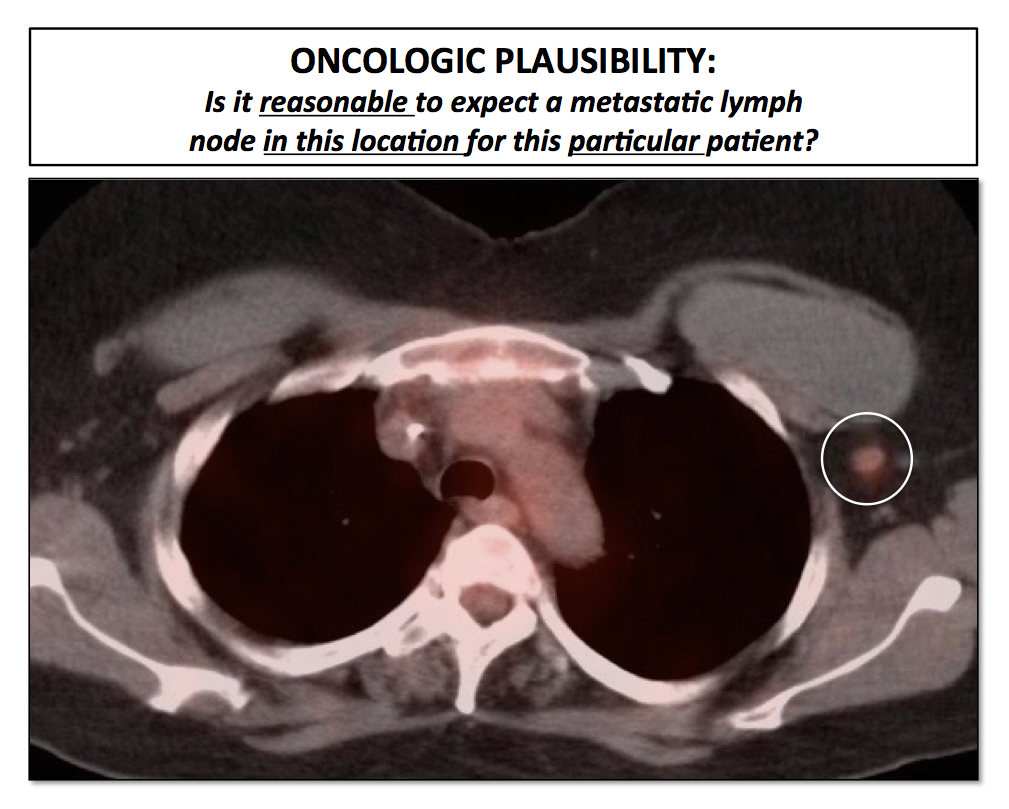
Because each case must assessed in the clinical context of its specific presentation (“oncologic plausibility”, discussed here), there are no hard and fast rules for determining whether an FDG-avid node is metastatic or inflammatory/reactive.
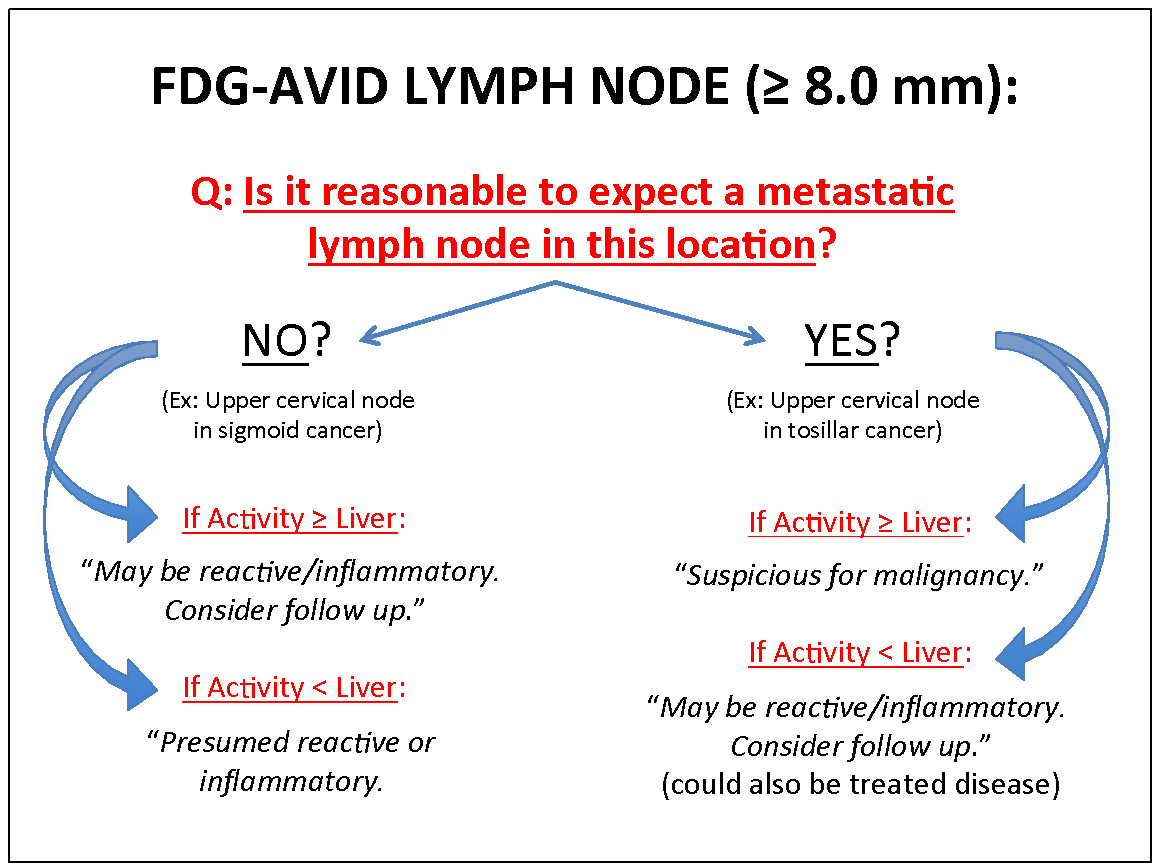
At PETCTMD, we generally approach FDG-avid nodes by asking 3 central questions, and then applying the following algorithm:
Question #1: Is it reasonable to expect a metastatic lymph node in this location?
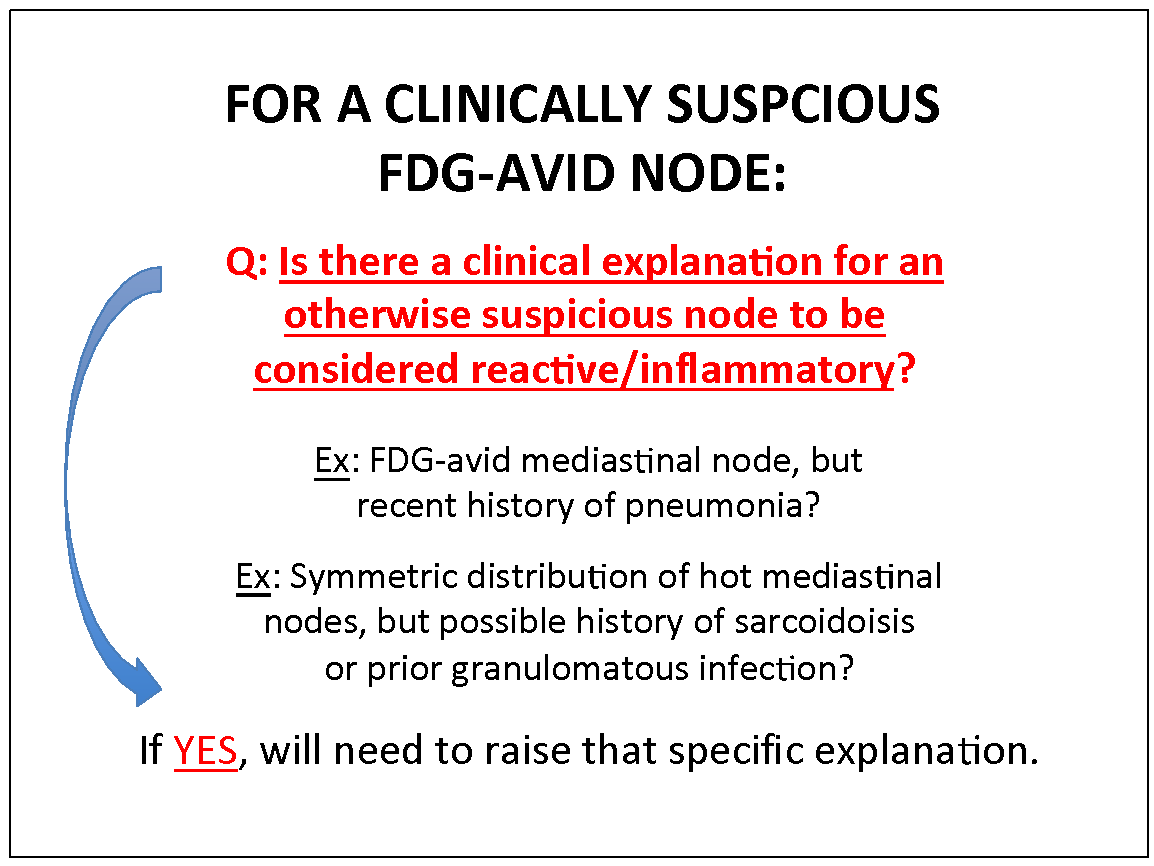
Question #2: Is there a clinical explanation for an otherwise suspicious node to be considered reactive/inflammatory?
Question #3: Does a clinically suspicious, but not significantly FDG-avid, node measure less than 8.0 mm?